Introduction to Perfluoropolyether (PFPE)
- Overview
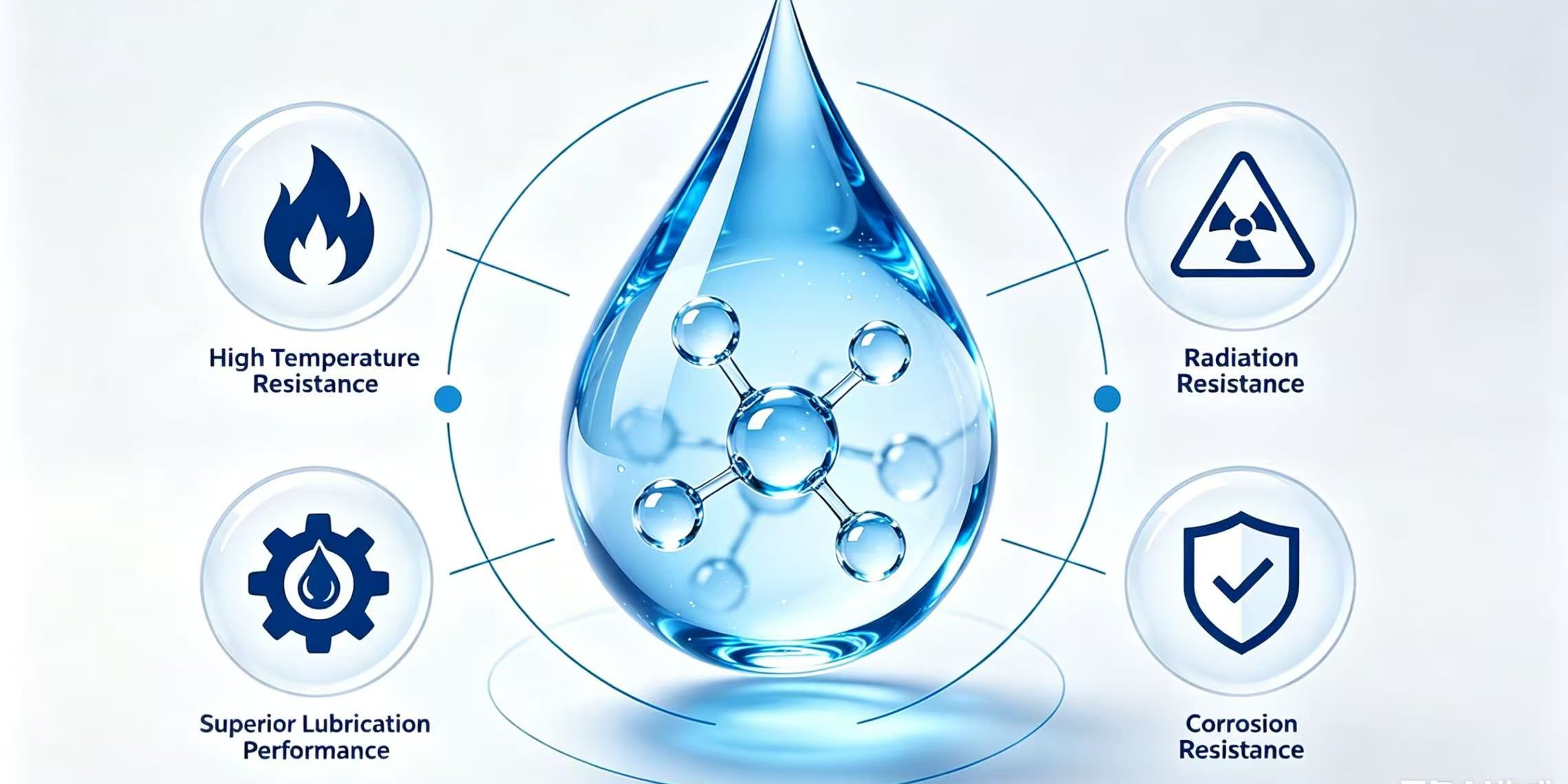
Perfluoropolyethers (PFPEs), a unique class of perfluorinated polymers initially researched and developed in the 1960s, are composed exclusively of three elements: carbon (C), fluorine (F), and oxygen (O), with an average molecular weight ranging from 500 to 15,000. Distinguished by exceptional thermal stability, oxidation resistance, radiation resistance, chemical corrosion resistance, and inherent non-flammability, PFPEs have served as ultra-reliable lubricants for decades in high-precision, cutting-edge sectors including military defense, aerospace engineering, and the nuclear industry. Today, their application scope has expanded extensively, covering chemical manufacturing, electronics, electrical engineering, mechanical engineering, nuclear technology, and aerospace, establishing them as indispensable specialty fluorinated materials for extreme operating environments.
- Synthetic Methods
Based on distinct monomer feedstocks and polymerization mechanisms, PFPEs are classified into four structural categories: Type K, Type Y, Type Z, and Type D, each with a unique molecular architecture. Their mainstream commercial synthesis relies on two core technologies: photocatalytic polymerization and anionic catalytic polymerization.
- Structural Classification of PFPEs
- Type K PFPE
Structural formula:
It is a branched-chain perfluoropolymer synthesized via anionic polymerization of hexafluoropropylene oxide (HFPO), catalyzed by cesium fluoride (CsF). - Type Y PFPE
Structural formula:
This polymer is produced through ultraviolet-induced photooxidation of hexafluoropropylene (HFP), with a typical molecular weight of 1,000–10,000. - Type Z PFPE
Structural formula:
A linear perfluoropolymer formed by ultraviolet-initiated photooxidation of tetrafluoroethylene (TFE), its molecular weight generally ranges from 1,000 to 100,000. - Type D PFPE
Structural formula:
It is prepared by direct fluorination of the polymerized product of tetrafluorooxetane, yielding a linear perfluoropolyether structure. - Commercial Synthetic Processes
(1) Photocatalytic Polymerization
First commercialized in the 1960s by Italy’s Montefluos (later integrated into Solvay S.A.) under the Fomblin brand, this process uses tetrafluoroethylene (TFE) or hexafluoropropylene (HFP) as raw materials. The monomers undergo low-temperature oxidative polymerization with oxygen under ultraviolet irradiation to form crude PFPE.
Crude products contain unstable peroxide linkages in the main chain and acyl fluoride end groups, requiring thermal or photolytic treatment to remove peroxides, followed by end-capping with elemental fluorine for structural stabilization. This route primarily produces Type Y and Type Z PFPEs.
(2) Anionic Catalytic Polymerization
Industrialized in the 1970s, this method employs hexafluoropropylene oxide (HFPO) as the primary monomer, which undergoes anionic oligomerization in aprotic solvents with fluoride ions as catalysts, generating acyl fluoride-terminated PFPE oligomers.
Representative commercial products include DuPont’s Krytox (Type K) and Daikin’s Demnum (Type D, protected by 12 national patents for PFPE production technology). This process is dedicated to manufacturing Type K and Type D PFPEs.
III. Key Properties
The elemental composition (C, F, O) and unique perfluorinated molecular structure of PFPEs endow them with a set of unparalleled physical and chemical properties, making them superior to conventional hydrocarbon polyethers and other synthetic lubricants. As low-molecular-weight fluoropolymers, their viscosity is highly correlated with molecular structure and average molecular weight: higher-molecular-weight PFPEs exhibit lower volatility, a wider operating liquid temperature range, and excellent viscosity-temperature characteristics.
- Chemical Inertia
PFPEs are chemically inert to most corrosive substances, including strong acids, strong alkalis, and oxidizing agents. However, they are susceptible to degradation by nucleophiles (e.g., ammonia), active metals (e.g., sodium, potassium, aluminum), and Lewis acids, which compromise their thermal stability.
- Thermal-Oxidative Stability
In the absence of catalytic impurities, PFPEs remain thermally stable at 270–300°C even in an oxygen-rich atmosphere, with thermal decomposition temperatures reaching 350–410°C. The presence of metals, metal oxides, or metal fluorides reduces their thermal degradation temperature by approximately 50°C. Linear PFPE structures (e.g., Type Z, Type D) demonstrate better thermal-oxidative stability than branched-chain analogs (e.g., Type K). Thermal stabilizers such as aromatic amines, benzimidazole derivatives, and selenides effectively mitigate metal-induced degradation at high temperatures.
- Compatibility
PFPEs exhibit excellent compatibility with a broad range of materials, including oxidants (hydrogen peroxide, liquid oxygen), hydrocarbon fuels, unsymmetrical dimethylhydrazine, and diethylenetriamine. Type Y and Type Z PFPEs are particularly well-compatible with engineering plastics and synthetic rubbers, supporting diverse material pairing in industrial applications.
- Non-Flammability
Inherent non-flammability is a critical performance advantage of PFPEs, enabling their safe use in high-temperature, oxygen-enriched, and flammable atmosphere environments—an essential attribute for aerospace and industrial lubrication applications where fire safety is non-negotiable.
- Radiation Resistance
PFPEs possess outstanding radiation resistance. Under equivalent radiation doses, their viscosity growth rate is significantly lower than that of hydrocarbon oils and silicone oils, making them ideal for radiation-exposed environments such as nuclear facilities and aerospace systems.
- Physical Performance Advantages
Benefiting from the strong electronegativity of fluorine atoms and the fully fluorinated carbon chain shielded by fluorine, PFPEs feature high density, low surface tension, extremely low volatility, favorable viscosity-flow properties, and excellent dielectric performance. They also deliver superior lubricating performance and stable physical properties across wide temperature and pressure ranges.
- Applications
PFPEs are predominantly used as specialty lubricants, industrial functional fluids, and high-performance chemical additives, with core applications spanning the following sectors:
- Aerospace Industry
PFPEs are the preferred lubrication and sealing materials for critical aerospace components, including aircraft engines, thruster bearings, attitude control mechanisms, power transmission wheels, scanning mirrors, gear pumps, pressure gauges, metal joints, and threaded connectors. They perform reliably in vacuum, extreme temperature, and high-radiation space environments.
- Nuclear Industry
In nuclear engineering, PFPEs are used for bearing lubrication in ultracentrifuges and are the only material capable of resisting uranium hexafluoride corrosion at 130°C, making them irreplaceable for nuclear fuel processing and radiation-resistant mechanical systems.
- Electronics and Electrical Industry
They are widely applied in mechanical vacuum pump lubrication for semiconductor manufacturing processes, including plasma etching, chemical vapor deposition (CVD), and ion implantation. Additionally, PFPEs serve as high-performance lubricants for magnetic storage media such as hard disk drives and magnetic disks, ensuring low friction and long service life in precision electronic components.
- Chemical Industry
PFPEs act as high-performance working fluids for various vacuum pumps (rotary vane pumps, turbomolecular pumps, steam diffusion pumps) operating in corrosive gas environments. They also lubricate compressors and valves in contact with liquid oxygen, oxygen, corrosive gases, and oxidizing media.
- Other Industrial Sectors
PFPEs are extensively used in the oxygen production industry, electromechanical engineering, automotive manufacturing, and general mechanical equipment requiring lubrication under extreme conditions: high temperatures, heavy loads, strong corrosion, and oxidative atmospheres.
Acyl fluoride-terminated PFPE oligomers (synthesized from HFPO, tetrafluorooxetane, etc.) possess high chemical reactivity and can be functionalized into a variety of high-value derivatives, most notably perfluorinated surfactants.
These surfactants feature non-polar perfluoropolyether chains with both hydrophobic and oleophobic properties, alongside ultra-high surface activity and chemical stability. At extremely low concentrations, they drastically reduce the surface tension of aqueous solutions, exhibit directional adsorption, and form micelles in solution. They function as high-efficiency emulsifiers for emulsion polymerization, preventing agglomeration of monomer droplets or polymer particles to stabilize dispersion systems. With high solubility, low dosage, and non-toxicity, PFPE-based surfactants are high-tech, high-value-added products with vast market potential and broad application prospects.
- Representative PFPE Derivatives and Targeted Applications
PFPE derivatives expand the material’s functionality beyond lubrication, creating specialized solutions for precision manufacturing and surface engineering:
- PFPE-based fluorosurfactants: Used in semiconductor cleaning agents, water-based coating additives, and fire-fighting foam stabilizers;
- PFPE functional fluids: Applied in high-vacuum diffusion pump oils and heat transfer fluids for extreme-temperature equipment;
- PFPE grafted polymers: Used as anti-fouling, anti-corrosion coatings for aerospace, marine, and chemical equipment;
- PFPE lubricant additives: Enhances wear resistance and extreme-pressure performance of specialty lubricants for harsh industrial environments.